Ensure complete compliance with the UK WEEE Directive. We handle collections, auditing, data erasure, and issue legal Waste Transfer Notes for your commercial IT hardware disposal.
UK businesses and schools are legally responsible for ensuring that all electrical waste is processed through registered channels. Landfill disposal is strictly illegal.
WEEE recycling is the recovery, sorting, and ecological processing of Waste Electrical and Electronic Equipment. The process isolates hazardous materials and reclaims valuable metals to support a circular economy. UK businesses are legally obligated to recycle electrical devices, including redundant office computers, displays, and network switches.
Failing to comply with electrical waste regulations exposes companies to major environmental fines and legal prosecution. We make compliance straightforward by arranging licensed collections and delivering legally compliant transfer logs directly to your environmental managers.

Every collection must be documented. We supply complete Waste Transfer Notes confirming the origin, classification, and destination of your hardware. Keep these compliance records on file for a minimum of 2 years for internal audits.
Using unlicensed carriers exposes your organisation to fines. Clearcycle IT is an Environment Agency registered waste carrier (CBDU646177). We verify waste carrier licenses to prevent illegal dumping, keeping your logs compliant.
Compliance ensures that electronic components are harvested and recycled, extracting plastics and heavy metals safely to prevent toxic landfill runoffs. This supports carbon offset initiatives and circular manufacturing.
Our recycling methodologies prioritize carbon reduction, hardware refurbishment, and raw materials reclamation.
Our electronic waste reprocessing flow extracts maximum raw material value while ensuring eco-safe disposal. Hardware is sorted, audited, dismantled, and processed at Approved Authorised Treatment Facilities.
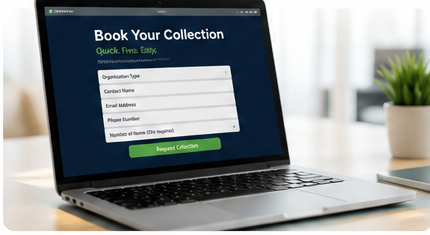
Clients can easily book a collection online and monitor their compliance audit trail using our secure administration dashboard, simplifying corporate Scope 3 ESG reporting.
We extend device lifecycles. Laptops and desktops that can be cleaned and repaired are updated for reuse in schools or community programmes, reducing carbon footprints. Refurbishing functional machines prevents carbon emissions from new manufacturing cycles.
Obsolete or damaged items are broken down manually in the UK. Materials are separated into core elements (copper, aluminium, circuit boards, plastics) for smelting feedstocks. We isolate hazard units like mercury flat panels and lithium battery packs under strict compliance guidelines.
The WEEE Regulations 2013 classify electrical waste into distinct categories based on size and function. Standard business IT equipment falls under Category 3 (IT and Telecommunications Equipment).
We handle multiple categories of commercial electronic waste. We process a wide range of corporate IT equipment (such as servers, desktop computers, laptops, and VoIP desk phones) and office consumer hardware (such as flat-screen monitors, printers, and document scanners).
Understanding your equipment category ensures proper transport logging. Some categories contain hazardous substances like mercury-backlit displays, lead-soldered circuit boards, and lithium batteries. These components require specialized environmental processing.
| WEEE Category | Description | Typical Business Examples | Hazard Level |
|---|---|---|---|
| Category 3: IT & Telecom | Data processing and communication hardware | Laptops, PCs, servers, routers, desktop phones | Medium (requires battery/PCB removal) |
| Category 4: Consumer EEE | Visual display and office print equipment | Monitors, flat panels, printers, document scanners | High (mercury lamps and CRT glass) |
| Category 2: Small Appliances | Electronic convenience tools | Kettles, office vacuum cleaners, water heaters | Low (primarily steel and plastic) |
| Category 6: Electrical Tools | Maintenance and facilities machinery | Drills, grass trimmers, facility blowers | Low (coils, magnets, housing) |
WEEE stands for Waste Electrical and Electronic Equipment. It covers any redundant commercial or household equipment that requires electricity or batteries to function. It is governed by UK WEEE Regulations.
An AATF is an Approved Authorised Treatment Facility. These are specialized recycling sites licensed by the UK Environment Agency. They are approved to reprocess WEEE and issue formal evidence of material recovery.
UK businesses must keep Waste Transfer Notes for a minimum of 2 years. Hazardous Waste Consignment Notes must be kept for 3 years. These records are required for environmental audits.
Yes. We handle visual displays containing mercury backlights. Our technical teams isolate these components. Examples of mercury-containing displays include older LCD flat panels. These are recycled in sealed chambers for safety.
Businesses that fail to recycle waste electrical products properly can face uncapped fines from magistrates' courts and civil sanctions from the Environment Agency. Complete tracking logs protect your organization from these penalties.
Fines for improper disposal of IT waste are steep. Let our team carry out a fully compliant, secure collection from your facility today. 10 major IT units minimum.
